「有難う」と「合掌」
誰かと握手をするとき、私たちは実に単純なことをしています。私が手を差し出し、あなたも手を差し出し、ほんの一瞬、私たちは身体的に触れ合います。そこには、どこか安心させるようなものがあります。「私はあなたを見ています。あなたも私を見ています。私たちは出会いました」と。
もちろん、すべての握手が深い意味をもつわけではありません。誰かに会ったとき、ただ習慣としてすることもあります。無意識にすることもあります。しかし、その身振りの奥には、もっと深いものがあります。それは、私たちの間に関係があることを認めることです。
そこで、最近私の心に浮かんでいる二つの日本語について考えてみたいと思います。**「有難う」と「合掌」**です。
私たちは普通、arigatō を英語で “thank you” と訳します。しかし、その言葉の歴史はもっと興味深いものです。「有難う」は古い日本語の「有り難し」から来ており、文字通りには、**「有ることが難しい」「めったにない」**という意味です。そこから「稀なもの」「貴重なもの」という意味になり、やがて、そのようなものに対して感謝するという意味になりました。
「有難う」の反対は、必ずしも「私は感謝しない」ではないのかもしれません。むしろ、**「当たり前だと思うこと」**なのかもしれません。
私がまだ幼かったころ、祖父が病気になりました。母は私に、祖父に手紙を書くように言いました。しかし私は先延ばしにして、結局書かずじまいでした。その数か月後、祖父は亡くなりました。私はそのことを生涯悔やんできました。私のほんの小さな行為が何かを変えたかもしれない。祖父との関係を、もう少し深めることができたかもしれない。それなのに、私はそれを当たり前のこととして受け流してしまったのです。
一見なんでもない頼み事だったものが、私にとって大切な学びとなりました。日常のどの瞬間が、後になって「もう一度あの時に戻れたら」と願う瞬間になるのか、私たちにはわかりません。
その意味で、「有難う」とは、日常の生命そのものが奇跡であることに気づくよう促す言葉なのかもしれません。もし私がもっとよく気づいていたなら、祖父に手紙を書いていたかもしれません。
そして、もう一つが**「合掌」**です。
この身振りは禅よりもはるかに古く、インドの añjali(アンジャリ) の伝統に由来し、仏教とともにアジア各地へ伝わりました。Añjali は、両手を合わせ、掌を少しくぼませることを意味します。伝統的に、そのくぼませた両手には、水や花などの供物、あるいは何か大切なものを捧げ持つことができました。また、それ自体が敬意を表す身振りでもありました。
ですから、合掌して両手を合わせるとき、私たちは単に「一つになること」の象徴を作っているのではありません。私たちは一つの器を作っているのです。私たちは捧げると同時に、受け取る用意をしているのです。
しかし禅は、この身振りに特別な深みを与えます。
両手を合わせるとき、完全に別々だった二つのものが突然一つになった、と考える必要はありません。それはもっと微妙なことを示しているのかもしれません。つまり、そもそも私たちが考えていたほど、分離は絶対的なものではなかったということです。
私はここにいて、あなたはそこにいる。私たちはそれぞれ異なる存在です。しかし同時に、私たちは互いに、そして周囲のあらゆるものに深く依存しています。この出会いも、無数の条件が集まり合ったからこそ可能になっているのです。
ですから、合掌は「関係」を身体で表現するものとなり得ます。
ここで、道元の礼拝についての教えがとりわけ興味深い意味をもってきます。『礼拝得髄』において道元は、要するに、智慧がどこから現れるかを、あらかじめ決めつけてはならないと説いています。
私たちは、普段なら見過ごしてしまうような人の中に法(ダルマ)と出会うかもしれません。女性であるかもしれない。子どもであるかもしれない。身分の低い人であるかもしれない。さらには、狐のような思いもよらぬ存在であるかもしれません。
大切なのは、差し出されているものを認め、それを受け取ろうとする私たちの心です。
つまり、法がどこで私たちに出会うか、私たちにはわからないのです。
私は礼拝する。そして礼拝することによって、私は心を開き、受け入れる者となります。私たちは無数の条件によって出会います。だからこそ、何が起こるかはわかりません。
道元は、法を悟った人に出会うとき、私たちは自分がすでに知っていると思っているその人に、ただ出会うのではない、と言います。その人にまったく新しく出会うのです。
そして道元は、「昨日は忘れ、ただ今、この時にその人と出会う」という趣旨のことを述べています。
「有難う」は言います。
「これは貴重なものです。当たり前だと思ってはいけません。」
そして、「合掌」は言います。
「私はこの瞬間から離れて立つことなく、この瞬間そのものに出会います。」
これは大切なことです。なぜなら、合掌とは単に私たちが信じる「考え」ではないからです。合掌は、私たちが実際に行うことです。
私たちは両手を合わせ、礼拝します。禅堂で、仏に向かって、そして互いに向かって、何度も何度も礼拝します。
心が理解するより先に、身体が修行するのです。
時とともに、この身振りそのものが、世界と出会う一つのあり方になっていきます。
敬意をもって。
感謝をもって。
そして、開かれた心をもって。
しかし、ここには大切な注意があります。
すべての握手が、深い心からなされるわけではありません。
すべての「有難う」が、奇跡に気づいているわけではありません。
すべての「合掌」が、関係の深さを認めているわけではありません。
だからこそ、私たちは修行するのです。
慧寛(Ekan)
.
Arigatō and Gasshō
When we shake someone’s hand, we are doing something remarkably simple. I
reach out, you reach out, and for a moment we physically meet. There is something
almost reassuring about it. I see you. You see me. We have encountered one
another. Of course, not every handshake means very much. Sometimes it is simply
what we do when we meet someone. Sometimes it is automatic. But there is
something deeper underneath the gesture: an acknowledgment of relationship.
That brings me to two Japanese words that have been on my mind: arigatō and
gasshō.
We usually translate arigatō as “thank you.” But its history is much more
interesting. The word comes from an older Japanese expression, arigatashi,
literally suggesting something that is “difficult to be” or “difficult to come by.”
From there it came to mean something rare, precious, and eventually something for
which we are grateful.
The opposite of “thank you” may not be “I’m ungrateful.” It may simply be taking
something for granted.
When I was very young my grandfather was ill. My mother asked me to write him
a letter. I procrastinated and never got around to doing it. He died several months
later. All my life I have regretted this –my simple gesture could have made a
difference; maybe deepened a relationship. I took it for granted. What had seemed
like an insignificant request became a learning moment. We don't know which
ordinary moments will become the moments we wish we could have again. In a
sense, arigatō is an invitation to recognize the miraculous nature of ordinary life.
If I had been more aware, maybe I would have written the letter.
And then there is gasshō. The gesture is much older than Zen, coming from the
Indian tradition of añjali and carried across Asia by Buddhism. Añjali refers to the
joining and cupping of the hands. Traditionally, the cupped hands could hold an
offering—a handful of water, flowers, or something precious—or express
reverence. So when we bring our hands together in gasshō, we are not simply
making a symbol of unity. We are making a vessel. We are offering, and we are
becoming willing to receive.
2
But Zen gives the gesture a particular depth. When we bring the two hands
together, we don't have to imagine that two things that were completely separate
have suddenly become one. It may be pointing to something subtler: perhaps the
separation was never as absolute as we imagined. I am here, and you are there. We
are distinct. And yet we are also deeply dependent upon one another and upon
everything around us. This encounter is happening because countless conditions
have come together to make it possible.
So gasshō can become a physical expression of relationship. This is where Dōgen's
teaching on bowing becomes especially interesting. In the Raihai Tokuzui often
translated as “Bowing and Obtaining the Marrow,” Dogen says, in effect, that we
should not decide beforehand where wisdom can come from. We may encounter
the Dharma in someone we would normally overlook—a woman, a child, someone
of low status, even something as unexpected as a fox. The important thing is our
willingness to recognize and receive what is being offered.
The point is that we don't know where the Dharma may meet us. I bow—and in
bowing, I become open and receptive. We meet because of innumerable
conditions, anything is possible.
Dōgen says that when we encounter someone who has realized the Dharma, we
don't simply encounter the person we think we already know. We meet them
entirely anew. And then he says, “yesterday is forgotten, and I encounter him in the
moment, which is just this moment.” Arigatō says: This is precious. Don't take it
for granted. And gasshō says: I am willing to meet this moment without standing
apart from it. And this is important because gasshō isn't simply something we
believe. It is something we do. We put our hands together and bow—again and
again, in the zendo, toward the Buddha, toward one another. The body practices
before the mind has figured it out. Over time, the gesture itself can become a way
of meeting the world—with respect, gratitude, and openness
But there is an important qualification.
Not every handshake comes from a deep place.
Not every arigatō sees the miraculous.
Not every gasshō recognizes the depth of relationship.
And that is why we practice.
Ekan (慧寛)
.
.
.
.

.
.
.
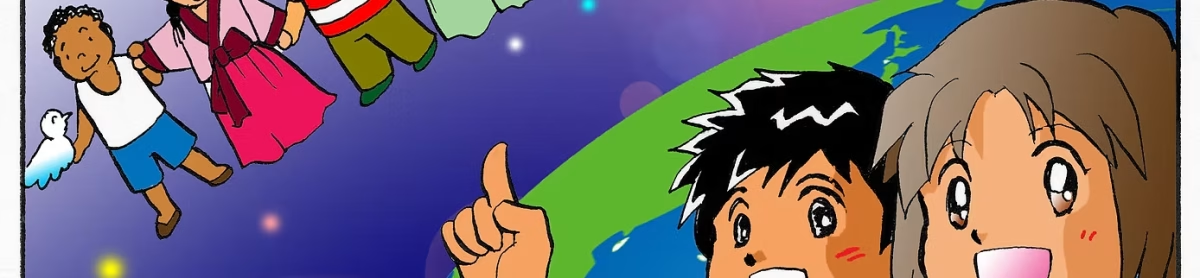


 平和・平安:非戦・非核 Peace/Safety: No War/No Nuke