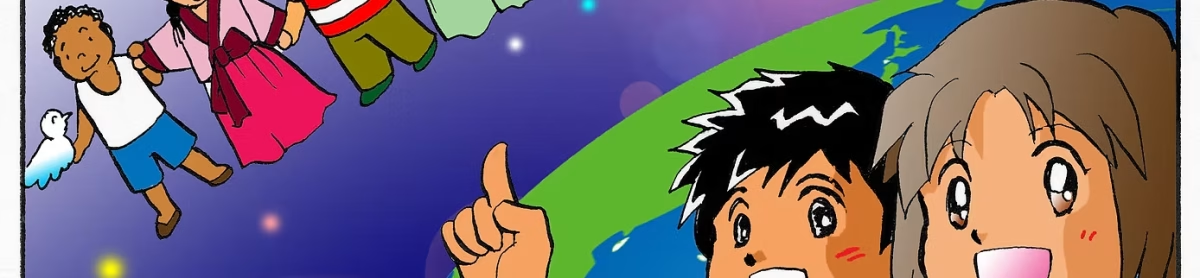
宇宙的笑い
日本には、よく知られたことわざがあります。
「笑う門には福来る」
笑いが、何かしら幸福を家に招き入れる、という意味でしょう。私はこの考えが好きです。しかし、ここで少し禅的に変えてみたいと思います。もちろん昔からある日本のことわざではなく、ちょっとした遊び心からの言葉です。
「笑う門には静寂宿る」
Warau kado ni wa seijaku yadoru.
“In a house of laughter, serenity dwells.”
禅はしばしば、とても厳粛なものとして描かれます。黒い衣をまとった僧侶が黙って坐禅をしている姿、簡素で厳かな寺院、石庭、香の煙、そして、聞いても分かったのか分からないのかさえ分からないような、不思議な言葉を語る人々――そんな情景を思い浮かべます。
しかし、禅にはもう一つの面があります。
そこには遊び心、型破りな精神、ばかばかしさを楽しむ心があり、そして、自分自身や自分の精神的な志をあまりにも深刻に受け取りすぎる私たちの癖を、笑い飛ばすようなところがあります。
**只管打坐(shikantaza)――「ただ坐る」**という実践にも、私にはそのような精神があるように思われます。
私たちは、どこかへ到達しようとして坐るのではありません。静寂を無理に作り出す必要もありません。ただ坐る。そして、ときに執着を手放すと、そこに静寂が現れる余地が生まれます。
日本の偉大な禅僧、道元禅師はこう書いています。
「仏道をならふといふは、自己をならふなり。
自己をならふといふは、自己をわするるなり。」
確かに私たちは、自分自身を研究するために実に多くの時間を費やしています。
自分が他人と比べてどうなのかを研究する。人が自分をどう思っているかを研究する。成功や失敗を検討する。過去の会話を何度も思い返して、「あの時こう言えばよかった」と考える。自分は十分やっているだろうか、十分なことを成し遂げているだろうか、自分がなりたい人間になりつつあるだろうか、と考え続けます。
私たちは実に熱心な「自己」の研究者なのです!
禅の修行は、もう一つの可能性を示してくれます。自己に注意を向けながらも、自己のことでそれほど頭をいっぱいにしない生き方です。
坐ること、歩くこと、食べること、働くこと、そして呼吸に気づくこと――こうした日常の営みが、少し違った質を帯び始めます。
心をよぎる一つ一つの思いを、すべてつかまえる必要はありません。ただそれに気づき、そして手放せばよいのです。
握りしめていた手が緩むにつれて、私たちは、より大きな静寂と笑いの可能性を発見します。
それは、何もかもがおかしいからでも、苦しみが現実ではないからでもありません。自分自身を、少し広い視野から見ることができるようになるからです。
おそらく、これも道元禅師が言う**「自己を忘れる」**ことの一面なのでしょう。
しかし、私たちはいつも気づきを保っているわけではありません。時には途切れます。些細なことで腹を立てることもあります。自分が頭の中で一生懸命作り上げていた物語が、実はそれほど筋の通ったものではなかった、と気づくこともあります。
しかし、それを必死に弁護する代わりに、その滑稽さに気づいて、
「ああ! またやってるな、古い友よ!」
と思えることがあります。
その一瞬、「私」を主役とした大ドラマが、それほど重要ではなくなります。
そして、おそらくそれが、笑いをあれほど開放的なものに感じさせる理由なのでしょう。まるで私たちは単に自分自身を笑っているのではなく、すでに宇宙に響いている笑いの合唱に加わっているかのようです。
只管打坐――ただ坐ることによって、私たちは握りしめていたものを緩めます。
そして、その手を放したところで、風にひらひら舞うカエデの種を追いかける子供たちのように、思わず嬉しくなっている自分を発見することがあるかもしれません。
木々も、リスも、月も、星々も、惑星も、私たちが自分をどれほど重要だと思っているかなどまったく気にすることなく、ただそれぞれの営みを続けています。
そしてもちろん、その後、私たちはまた自分だけのドラマへと戻っていきます。
私はもう、ずいぶん長い間、自己を研究してきました。
どうやら私は――
「資格過剰(over-qualified)」になってしまったようです!
慧寛(Ekan)
Cosmic Laughter
There is a familiar Japanese saying: warau kado ni wa fuku kitaru – “Good fortune comes to the house that laughs.” It suggests that laughter somehow invites good fortune into the home. I like that idea. But I’d like to offer a little Zen variation—not as an ancient Japanese proverb, but simply as a playful reflection:
Warau kado ni wa seijaku yadoru – “In a house of laughter, serenity dwells.”
Zen is often portrayed as very serious. We picture monks in black robes sitting silently in meditation, austere temples, rock gardens, incense, and people speaking in mysterious phrases that leave us wondering whether we understand anything at all.
But there is another side to Zen. There is playfulness, irreverence, absurdity, and a willingness to poke fun at our tendency to take ourselves—and our spiritual aspirations—too seriously.
The practice of shikantaza, “just sitting,” seems to me to have something of that spirit. We sit without trying to get somewhere. We don’t have to manufacture serenity. We simply sit, and sometimes, when we let go of attachment, serenity has room to appear.
Dōgen, the great Japanese Zen teacher, wrote: “To study the Buddha Way is to study the self. To study the self is to forget the self.”
We certainly spend a great deal of time studying ourselves. We study how we’re doing compared to everyone else. We study what people think of us. We study our successes and failures. We replay conversations and think about what we could have said. We wonder whether we’re doing enough, accomplishing enough, or becoming the person we want to be.
We are very serious students of ourselves!
Zen practice offers another possibility: paying attention to the self without becoming quite so pre-occupied. Sitting, walking, eating, working, and noticing the breath— ordinary activities begin to take on a different quality. We don’t have to grab onto every thought that passes through our mind. We can simply notice it, and let it go. As the grip loosens, we discover a greater capacity for serenity and laughter. Not because everything is funny, or suffering isn’t real, but because we see ourselves with a little more expansiveness. Perhaps this is part of what Dōgen meant by “forgetting the self.”
But we are not always mindful. There are lapses. We become irritated over something trivial. We discover that the elaborate story we were telling ourselves doesn’t quite hold up. But instead of defending it, we see the absurdity of it and think, “Ah! There I go again, old friend!”
For a moment, the drama starring “me” as the leading character seems less important. And perhaps that is why laughter feels so expansive—as though we are not merely laughing at ourselves, but joining in a chorus that is already there. In shikantaza, just sitting, we loosen our grip. And in that loosening, we may find ourselves gleeful, like children chasing maple seeds fluttering in the wind. The trees, the squirrels, the moon, the stars and planets simply carry on, utterly unconcerned with our self-importance.
Then, of course, we return to our private dramas.
I’ve been studying myself for quite a long time.
I’m beginning to think I’m over-qualified!
Ekan (慧寛)
.
.
.
.
.
.

.
.
.
.
.
.

.
 平和・平安:非戦・非核 Peace/Safety: No War/No Nuke