三毒:The Triple Poisons


三毒


通常三毒と言われる原語は三悪根で、貪瞋痴(lobha, dosa, moha)である。十二支縁起で苦の因:渇愛と輪廻の因:無明は二根と呼ばれ貪と痴に対応し、これに瞋恚を加えたものが三毒:三悪根としてよかろう。


十二支縁起は個人内部の苦・輪廻の直接縁起を説くもので瞋恚は含まれていないが、取(身の取得:我所有)が我他、差別、瞋恚の始まりとしてよい。故に瞋恚(怒)の原語dosaは根源にdo (two)を含むと思われる。


Dosaの梵語はdveṣa語根はdviṣとされるがパーリ語圏内ではmāna-sa (心の)teja-sa(光の)の様にdo-sa(二の:差別の)と感じられた可能性がある。動物・人間は動くと身体を感じ、自己同定・我見・我執・我慢・我利等の始まりである。


取の原語(upa-adana)は「近寄り取る」で燃料が火に近寄り取ると火になる(同定)であり、漢字の取は耳を掴む手で「牛耳る」(主権)の意味になり、我の同定と主権を表し普遍法縁起(相依・相対)に反する。


これは自我の始まりであり、集団としての自国の始まりであり、分別・差別・敵対・戦争等の始まりであり、特に集団業三毒による集団四苦(独裁・戦争・核・破局)は「国家と戦争の世紀」「地球問題群と破局」の終末危機を生み出している。


苦の根本である無明(a-vijja/a-vidya: video: 直証)は縁起(悟法)縁滅(涅槃)を体験・確信を持たないことを意味し、動物は行動を優先するので涅槃(止業)を体験するのは稀であり、自己保存本能(欲望)から生存・生成(生死)の輪廻に嵌る。


ブッダは恒常・主権の我(アートマン)の存在を普遍法・縁起により否定して、無常・苦(思い通りにならない)事から究極的真理として諸法(一切現象)無我を唱えた。世間的役割・責任を果たす自己と普遍法を二洲(依拠)として認めている。


ゴータマは苦・輪廻の解決の道を求め(求道者:菩薩)て出家し努力の結果縁起の普遍法に目覚めブッダ(覚者)となり、更に一切救済の為の菩薩として四諦・八聖道等の教法を共有する為に乞食しながら一所不住の遊行教化活動に一生を捧げた。


人類は生類の長い生存本能を受け継ぎ生存競争に共同生活・脳・手による象徴・道具:言語・科学・文化・技術・製造・文明等を発展させて覇権を握ったが、社会的役割・記憶・予測などで自我を強め自我・自国の利益追求が破局の危機を招いた。


自我・自国で我見・我利の三毒業を続ければ苦・輪廻は解決されないので個人・集団の苦・輪廻の解決が必須である。それには各人が業・三毒の由来・現実・解決の為に覚醒・活動をして自己・社会・環境を改善・解決に努力する必要がある。

.


The Triple Poisons


Good morning!

The original Buddhist term commonly translated as the Triple Poisons is more precisely the Triple Unwholesome Roots (akusala-mūla): lobha (desire or greed), dosa (aversion or discrimination), and moha (delusion or nescience).

In the Twelvefold Dependent Co-origination, the cause of suffering is identified as craving (taṇhā) and the cause of saṃsāra as nescience (avijjā). These two are the Two Roots, corresponding respectively to lobha and moha. Adding dosa yields the Triple Poisons, or Triple Unwholesome Roots.

The Twelvefold Dependent Co-origination primarily explains the individual suffering and saṃsāra, thus dosa is not listed in it. However, upādāna (appropriation) of the body as “I” and “mine,” naturally gives rise to the distinction between self and other, thereby becoming the origin of discrimination and hatred. In this sense, dosa may be understood as arising from duality.

The Sanskrit form of dosa is dveṣa, derived from the verbal root dviṣ according to traditional philology. Yet within the Pāli-speaking tradition, it is conceivable that the word was perceived as do-sa, like mānasa (“of the mind”) or tejasa (“of light”). Thus, dosa may have suggested the state of two-ness—the discrimination between self and other. Whenever animals move, they become aware of the body, giving rise to self-identification, self-view, and self-interest.

The Pāli word upa-ādāna literally means “coming near to take.” Fuel that coming near to take fire becomes fire, just as we identify with the body as “I” and “mine.” The Chinese character 取 (“to take”) originally depicts a hand grasping an ear, signifying “control of it” or “exercising sovereignty.” Thus, upādāna represents the selfhood and sovereignty, in contrast to the universal Dharma of Dependent Co-origination, relatedness and relativity.

This marks the beginning of the ego-self, the beginning of attachment to one’s own state, and ultimately the beginning of discrimination, hostility, and war. Today, the collective karma of the Triple Poisons manifests itself in the Four Collective Sufferings—dictatorship, war, nuclear weapons, and global catastrophe—producing the Century of Nation-States and War and the Age of Global Problems and Catastrophe.

The fundamental root of suffering is nescience (a-vijjā; Sanskrit: a-vidyā, cf. a-video: witness)—the absence of direct realization of Dependent Co-origination (Dharma-awakening: bodhi), and Dependent Cessation (nirvāṇa). Because animals naturally prioritize action for survival, the direct experience of nirvāṇa—the cessation of karma—is exceedingly rare. Governed by the instinct for self-preservation, beings remain caught in the constant becoming, birth, and death.

The Buddha denied the existence of a permanent, sovereign self (ātman) on the basis of the universal Dharma of Dependent Co-origination. Because all conditioned things are impermanent and dis-satisfaction (duk-kha: wrong going), he taught the ultimate truth of non-self (an-attā). He, however, acknowledged both the conventional self that fulfills social roles and responsibilities and the universal Dharma as the Two Refuges (Two Islands) upon which we should rely.

Prince Gautama left home as a seeker of awakening (bodhisattva) in search of a solution to suffering and saṃsāra. Through striving he awakened to the Dharma of Dependent Co-origination and became the Buddha, the Awakened One. Thereafter, as a bodhisattva now for the liberation of all beings, he spent the rest of his life wandering without fixed abode, living on alms while sharing the Dharma—including the Four Holy Truths and the Holy Eightfold Path—with everyone.

Human beings inherited the long evolutionary history of survival instinct. Through cooperative living, increasingly sophisticated brains and hands, symbolism of language, science, culture, technology, manufacturing, and civilization, humanity became the dominant species on Earth. Yet these same capacities strengthened the sense of self through social identity, past memory, future fear, and self-interest. The pursuit of self and state advantage has now brought humanity to the brink of global catastrophe.

As long as individuals selves and states continue to act from the Triple Poisons through self-views and self-interest, suffering and saṃsāra cannot be overcome. Therefore, both individual and collective liberation are essential. Each of us must awaken to the origin, reality, and stilling of karma and the Triple Poisons, and actively work to transform ourselves, society, and the environment through wisdom and compassionate action.

Thank you.

.

.

.

.


,

triple-poisons2.png (1024×1536)

.

.

.

.

.


.

.

.

.

.

.

.

接心:Sesshin


Sesshin (Embracing the Mind)


Although sesshin (接心) is commonly written as “touching the mind,” it may also be written 摂心, meaning “embracing the mind.” Shortly after a group of Zoroastrian fire worshippers converted to Buddhism, the Buddha pointed to a nearby fire telling, “The world is burning.” He taught that the six sense faculties—eye, ear, nose, tongue, body, and mind—are all burning (with the fires of desire, discrimination, and delusion). He therefore advised his disciples to guard the six sense doors, just as a turtle withdraws its head and four limbs into its shell for protection.

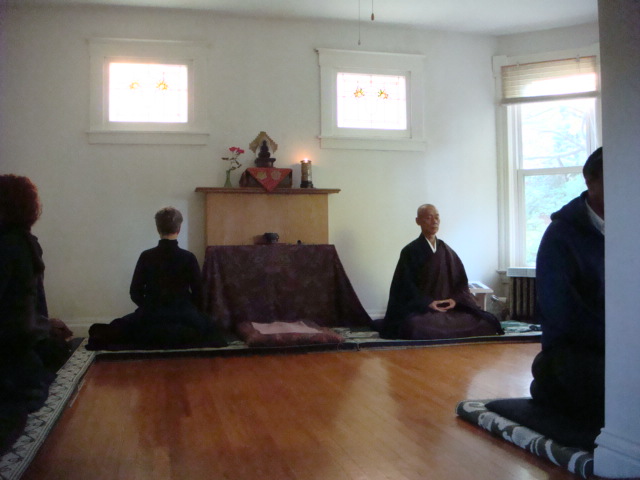
The Buddha himself, in addition to observing the annual three-month rainy-season retreat (vassa), occasionally withdrew alone from the noise and distractions of society to devote himself to extended periods of meditation. Following this example, the Zen tradition observes intensive meditation retreats lasting three months, one month, one week, one day, or other periods. During these retreats, practitioners settle and calm their minds through sesshin (intensive zazen), while also engaging in samu (work practice), in which they leave the meditation cushion and devote themselves wholeheartedly to physical work. These represent the complementary practices of stillness and activity.

Traditionally, sesshin has been practiced communally in monasteries and Zen centers, where practicing together naturally strengthens concentration and mutual encouragement. In recent years, however, we have sought to make sesshin accessible to those unable to attend in person by allowing individuals to participate remotely at the same time. Through Zoom and similar technologies, practitioners can remain closely connected despite geographical distance. In the future, it would be beneficial to develop even more accessible ways for anyone, anywhere, to participate in sesshin.

The Japanese expression meikyō shisui (“a clear mirror and still water”) describes a mind that is calm, transparent, and undisturbed, clearly reflecting the world as it is and responding appropriately. Zazen cultivates such a state. Just as water in a bowl naturally becomes calm and clear when the bowl is set down without disturbance, by harmonizing (ordering) the body, the breath, and the mind (chōshin, chōsoku, chōshin), we naturally enter the state of nirvāṇa, where the karmic winds have ceased. In that stillness, we directly realize the universal Dharma—the dependent co-origination and cessation of all phenomena.

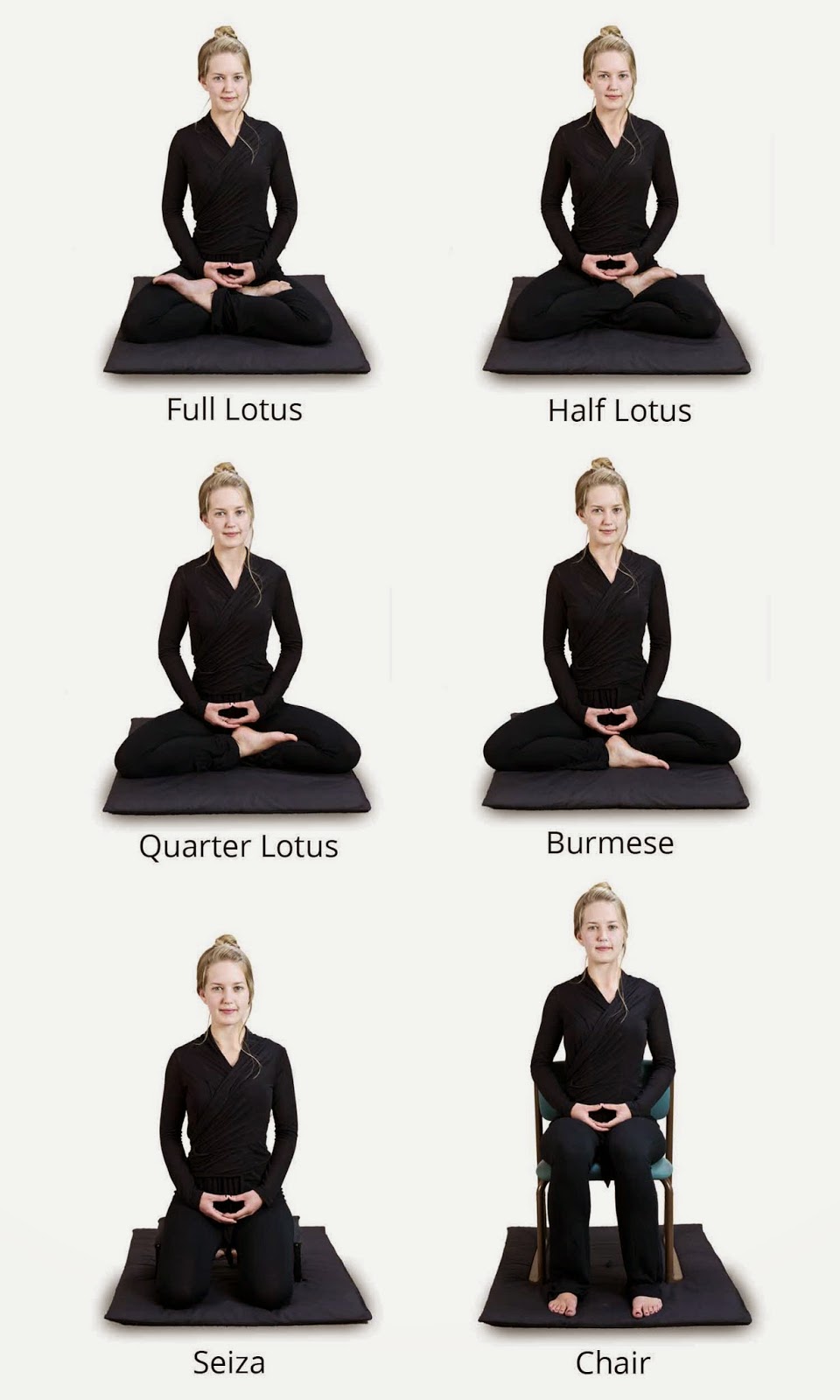
A spinning top, when perfectly balanced, appears completely still even while rotating at full speed. In Japanese, such a top is said to be suwaru (“firmly settled”) and sumu (“clear and pure”). Likewise, the full lotus posture provides a stable three-point-support foundation through the crossed legs, allowing the upper body to remain upright, balanced, and properly aligned. Correct posture is essential for regulating the breath, and deep, harmonious breathing in turn unifies and harmonizes body, mind, and the surrounding world, just as the different colors of a rapidly spinning top merge into a single harmonious unity.

Throughout biological evolution, the karma necessary for survival has strengthened the Triple Poisons—desire, discrimination, and delusion. These appear as self-centered views, self-interest, attachment to the ego, discrimination between self and others, and the endless pursuit of desire. As a result, we fail to perceive the true nature of reality: the Dharma of Dependent Co-origination, the universal web of mutual relatedness and relativity extending throughout infinite space and time. Without this vision, genuine justice and harmony cannot prevail in the ordinary world. Zazen is therefore indispensable for directly awakening to the truth of the universe and cultivating wisdom.

As we have seen in the Twelvefold Dependent Co-origination, the root of suffering is craving, while the root of saṃsāra is ignorance—no witness of nirvāṇa. Liberation from suffering and saṃsāra, and the realization of immovability, fearlessness, and the deathless, depend upon eradicating these two roots. Today, humanity also faces collective karmic suffering in the forms of dictatorship, war, nuclear weapons, and global catastrophe. To resolve these, not only craving and nescience but also discrimination and hatred must be overcome. The conquest of the Triple Poisons is therefore essential.

May we all overcome desire, discrimination, and delusion together!


接心


接心は摂心とも書くが、ブッダ(覚者)は最近拝火教徒で集団改宗した人達に近くに起きた火事を指した「世界は燃える」と言い、人間の眼耳鼻舌身意が「熾燃と燃える」事を指摘した。そして徘徊動揺止まない六官を「亀が頭や四肢を甲羅に納め防護する様に戸締りするよう勧めた。


ブッダ自身も雨安居の他にも一人世の喧騒を避けて長期間坐禅を行うことがあった。禅宗ではそれに倣い三ヶ月の安居や一ヶ月、一週間、一日など集中的に瞑想をし自心を納め鎮める摂心・接心の坐禅と、坐布を離れて作業に集中する作務をする。これらは静中と動中の修行である。


普通接心は僧院・禅センターなどで集団で行い、それなりの効果があるが、最近こちらではそのような便の無い人の為に同時に遠方で個人参加できるようにし、ズームなどの手段を使って更に連絡を密にする様にしているが、将来は誰にも参加できる方法を考え普及した方が良い。


明鏡止水とは心が動揺せず透明静寂に物事・世界を反映し、対処できる様子を言うが、坐禅はお椀を静かに置けばその中の水が自然に透明清澄になる様に調身調息調心して業風の止んだ涅槃の状態に入り、そこで普遍的真理である一切現象の縁起・縁滅の法を覚証することが出来る。


独楽が一所に止まり(正)動揺せず完全に調和回転する状態を「据わる(坐る)、清む(澄む)」と言うが、結跏趺坐は両足を組み安定した三点支持を得てその上に上体を直立正斉に調身する事が調息に必須であり、調息(長息)が独楽の各色融合調和の様に心身界の調心に重要である。


動物として生存競争の為の業は貪瞋痴三毒の業を強化して来た事が我見・我利・我執・自他分別・欲望追求となり世界の本来の姿である法:縁起(時空無限因縁による相依・相対)世界が見えず公正が行われないない俗界から大宇宙真実を覚証・知恵にする為に座禅は必須である。


十二支縁起で見たように苦の因は欲、輪廻の因は無明(涅槃む覚証)であり、苦・輪廻の解決、不動・不畏・不死獲得はこの二根の根絶にある。集団業四苦(独裁・戦争・核・破局)の解決は二根に加え差別・瞋恚が重要であり三毒退治が必要である。三毒解決を皆ができますよう!

.

.

.


.

.

.

.

.

.

.

法:Dharma


法(dharma)


お早うございます!


法(dharma)は 1.形態(form: d-harmより: 現象:真理)、2.規則(norm: d-h-armより:現象の規則:倫理)、3.諸法の法:縁起(元来は感覚器官と感覚対象に依る「知覚・意識・対象・世界の発生」に覚醒したが後に一切現象に適用されたもの)。4. 教法(1〜3の教え):これらとこれらを応用したブッダの教えを意味する。


諸法(形態・現象)の法(規則・法則・真理・倫理)は縁起(因縁生起)、即ち、一切現象は無量の因(直接原因)と縁(間接条件)により相依生起するということである(諸科学で用いられ、一般に広まった因果律(原因と結果の関係)に似ているがさらに広く含み一切に適用され、理解され、生き方、世俗・超俗等に関わる。


科学では一般に因果律は因と果は種から果が生ずる様に直接的・線形に解釈され、対象に用いられるが科学者自身に向けられず、その態度・倫理・修養には向けられないが、仏教の縁起はむしろ縁を重視し、種が芽を出し果を結ぶには水・温度など自他・時空のあり方修養全体についてで、観念、対象、世俗を超えた真理として扱われる。


これは私達が他者(他種・要素・世界・宇宙など)と相依・相対関係にあることを意味し、一切が相互に関係し、相対的であり、孤立・独立、絶対・主宰者はなく私達が調和、健康、幸福になる為には共存・共和・共同・共栄して生き、聖(全体健全)に帰一(宗教:真理・倫理)した世界を作る努力する責任があることを意味する。


縁起の原語paṭicca-samuppāda/praṭītya-samutpādaは二葦束が依(縁)り合って立つ様に感覚器官と対象が接触して意識・世界が生起する様子を表した言葉である。この仕組みを起点として生ずる身体・感受・想念・意欲・意識の五蘊(集合体)が自我意識を生み(識縁起)、欲望・行為・苦(不満)の三道(過程)(渇愛縁起)を生む。


十二支縁起(bhava-cakka/bhava-cakra、生成輪、輪廻)は縁起の法の適用例の最もよく知られた例だが、口碑による線形の表出(三世両重の因果と呼ばれる胎生学的解釈)の為とヒンズー教の輪廻説により誤解されているが、上の二縁起と無明(涅槃の無覚証)による身体専有(同定)により生老死の変異に入る(無明縁起)。


動物としての人間は動くと同時に身体を知覚して我・我所(我の所有)とするから、空腹や怒りを感じると餓鬼や修羅の状態になり、生死の流れ(全流:全体刻々変化の意で、ヒンズー教の死後輪廻ではない)に入る。静坐・坐禅はこの無意識の習慣(業)を止め涅槃(無風、業の)に入り渇愛・無明の二根を静める法である。


動物は自己存続の為に動く事を習慣としている為に静坐・坐禅する事は馴染みなく継続は難しいので涅槃に入り縁起・無我・法界の覚証が得られず、求不得苦、生老死・六道輪廻をするが、誰でも坐禅により涅槃・覚醒・般若(先見・知恵・解決)・不動・不畏・不死・無量寿光等得られ自他一切の為になるので是非試みられたい。


有難うございます。

。


Dharma


Good morning!

The Sanskrit word dharma (√dhṛ: endure) has several interrelated meanings:

  1. Form (from the root d-harm)—that which appears as phenomena or reality.
  2. Norm or Principle—the laws, order governing phenomena (from d-h-arm).
  3. The Dharma of all dharmas (phenomena): Dependent Co-origination (pratītya-samutpāda)—originally the Buddha’s awakening to the origination of perception, consciousness depending on sense organs and objects, mind-world, later extended to explain all phenomena.
  4. The Buddha’s Teaching—the teachings based upon the above meanings and their practical application to human life.

The Dharma (law, principle, truth, and ethics) of all phenomena is Dependent Co-origination. It teaches that every phenomenon originates through the interdependence of innumerable causes (hetu: direct causes) and conditions (pratyaya: indirect conditions). Although this resembles the modern scientific concept of causality—the relationship between cause and effect—it is much pervacive and profound in perspective and practice. It applies universally, not only to physical phenomena but also to human existence, ethics, spiritual practice, liberation (from mundane existence).

In modern science, causality is generally understood as a direct, linear relationship between cause and effect, like a seed producing a fruit. It is primarily applied to external objects and processes, but seldom to the scientist’s own attitudes, conduct, ethical cultivation, or way of life. Buddhism, however, places particular emphasis upon conditions. A seed cannot sprout or bear fruit without water, soil, temperature, sunlight, and countless other supporting conditions throughout time and space. Likewise, our own growth depends upon our relationship with others, society, nature, and the universe. Thus, Dependent Co-origination is understood as a truth that transcends conceptual thought, objective analysis, and conventional practice.

Dependent Co-origination means that we exist only through relationships with others—including other people, other species, the natural world, and the universe itself. Everything exists in mutual relation and relativity; nothing is isolated, independent, absolute, or sovereign. Consequently, if humanity wishes to realize harmony, health, happiness, and holiness (wholly wholesomeness), we bear the responsibility of creating a world founded upon coexistence, cooperation, co-prosperity, and concurrence with holiness—that is, with Truth and Ethics.

The original Pāli and Sanskrit terms for Dependent Co-origination—paṭicca-samuppāda and pratītya-samutpāda—evoke the image of two bundles of reeds standing by leaning against one another. Likewise, consciousness and the mind-world arise through the contact between the sense organs and their objects. From this process arise the Five Aggregates (pañca-skandha)—body (form), sensation, ideation, volition, and consciousness—which generate the sense of self (the Dependent Co-origination of Conscious World). From this arise desire, action, and suffering (the Dependent Origination of Craving, called Three Ways: Steps).

The Twelvefold Dependent Co-origination (bhava-cakka or bhava-cakra, the Wheel of Becoming) is the best-known application of the principle of Dependent Co-origination. It has often been misunderstood because it was transmitted orally as a linear sequence and later interpreted, under the influence of Hindu doctrines of reincarnation, as a theory extending over three lifetimes in double causalities. In reality, it should be understood together with the two forms of Dependent Origination described above and this one: through nescience (a-vidyā: a-video)—no-witness of Nirvāṇa—we identify with the body, thereby entering the continual transformations of birth, aging, illness, and death (the Dependent Origination of Nescience).

As animals, human beings perceive the body instantly and instinctively identify it as “I” and “mine.” Consequently, when overcome by hunger, anger, or other impulses, we immediately enter the states symbolized by the Hungry Ghost Realm or the Realm of the Asuras. In this way we are carried along by the ever-changing stream of birth-and-death (Sam-sara means Total Flow), which refers not to postmortem reincarnation in the Hindu sense, but to the ceaseless transformations occurring moment by moment throughout life. Quiet sitting—zazen—brings this unconscious karmic habit to rest. Entering Nirvāṇa, the “windless” state in which karmic activity is stilled, it calms the two fundamental roots of suffering: craving and nescience.

Because animals survive through constant activity, remaining quietly seated in zazen is unfamiliar and difficult to sustain. As a result, few realize Nirvāṇa or directly awaken to Dependent Co-origination, non-self, and the Dharma Realm. They continue to experience the suffering of unfulfilled desire, birth, aging, illness, death, and the continual cycle of the Six Realms. Yet anyone can practice zazen. Through sincere practice one may realize Nirvāṇa, awakening, prajñā (prognosis: foresight to solve suffering), steadfastness, fearlessness, deathlessness, limitless life, light, liberation, love and thereby benefit both oneself and all beings. Therefore, everyone is warmly encouraged to undertake this practice.

Thank you.


.

.

.

.

.


.

.

.

.

.

.

法:Dharma

法(dharma)

お早うございます!

法(dharma)は 1.形態(form: d-harmより: 現象:真理)、2.規則(norm: d-h-armより:現象の規則:倫理)、3.諸法の法:縁起(元来は感覚器官と感覚対象に依る「知覚・意識・対象・世界の発生」に覚醒したが後に一切現象に適用されたもの)。4. 教法(1〜3の教え):これらとこれらを応用したブッダの教えを意味する。

諸法(形態・現象)の法(規則・法則・真理・倫理)は縁起(因縁生起)、即ち、一切現象は無量の因(直接原因)と縁(間接条件)により相依生起するということである(諸科学で用いられ、一般に広まった因果律(原因と結果の関係)に似ているがさらに広く含み一切に適用され、理解され、生き方、世俗・超俗等に関わる。

科学では一般に因果律は因と果は種から果が生ずる様に直接的・線形に解釈され、対象に用いられるが科学者自身に向けられず、その態度・倫理・修養には向けられないが、仏教の縁起はむしろ縁を重視し、種が芽を出し果を結ぶには水・温度など自他・時空のあり方修養全体についてで、観念、対象、世俗を超えた真理として扱われる。

これは私達が他者(他種・要素・世界・宇宙など)と相依・相対関係にあることを意味し、一切が相互に関係し、相対的であり、孤立・独立、絶対・主宰者はなく私達が調和、健康、幸福になる為には共存・共和・共同・共栄して生き、聖(全体健全)に帰一(宗教:真理・倫理)した世界を作る努力する責任があることを意味する。

縁起の原語paṭicca-samuppāda/praṭītya-samutpādaは二葦束が依(縁)り合って立つ様に感覚器官と対象が接触して意識・世界が生起する様子を表した言葉である。この仕組みを起点として生ずる身体・感受・想念・意欲・意識の五蘊(集合体)が自我意識を生み(識縁起)、欲望・行為・苦(不満)の三道(過程)(渇愛縁起)を生む。

十二支縁起(bhava-cakka/bhava-cakra、生成輪、輪廻)は縁起の法の適用例の最もよく知られた例だが、口碑による線形の表出(三世両重の因果と呼ばれる胎生学的解釈)の為とヒンズー教の輪廻説により誤解されているが、上の二縁起と無明(涅槃の無覚証)による身体専有(同定)により生老死の変異に入る(無明縁起)。

動物としての人間は動くと同時に身体を知覚して我・我所(我の所有)とするから、空腹や怒りを感じると餓鬼や修羅の状態になり、生死の流れ(全流:全体刻々変化の意で、ヒンズー教の死後輪廻ではない)に入る。静坐・坐禅はこの無意識の習慣(業)を止め涅槃(無風、業の)に入り渇愛・無明の二根を静める法である。

動物は自己存続の為に動く事を習慣としている為に静坐・坐禅する事は馴染みなく継続は難しいので涅槃に入り縁起・無我・法界の覚証が得られず、求不得苦、生老死・六道輪廻をするが、誰でも坐禅により涅槃・覚醒・般若(先見・知恵・解決)・不動・不畏・不死・無量寿光等得られ自他一切の為になるので是非試みられたい。

有難うございます。

。


Dharma

Good morning!

The Sanskrit word dharma (√dhṛ: endure) has several interrelated meanings:

  1. Form (from the root d-harm)—that which appears as phenomena or reality.
  2. Norm or Principle—the laws, order governing phenomena (from d-h-arm).
  3. The Dharma of all dharmas (phenomena): Dependent Co-origination (pratītya-samutpāda)—originally the Buddha’s awakening to the origination of perception, consciousness depending on sense organs and objects, mind-world, later extended to explain all phenomena.
  4. The Buddha’s Teaching—the teachings based upon the above meanings and their practical application to human life.

The Dharma (law, principle, truth, and ethics) of all phenomena is Dependent Co-origination. It teaches that every phenomenon originates through the interdependence of innumerable causes (hetu: direct causes) and conditions (pratyaya: indirect conditions). Although this resembles the modern scientific concept of causality—the relationship between cause and effect—it is much pervacive and profound in perspective and practice. It applies universally, not only to physical phenomena but also to human existence, ethics, spiritual practice, liberation (from mundane existence).

In modern science, causality is generally understood as a direct, linear relationship between cause and effect, like a seed producing a fruit. It is primarily applied to external objects and processes, but seldom to the scientist’s own attitudes, conduct, ethical cultivation, or way of life. Buddhism, however, places particular emphasis upon conditions. A seed cannot sprout or bear fruit without water, soil, temperature, sunlight, and countless other supporting conditions throughout time and space. Likewise, our own growth depends upon our relationship with others, society, nature, and the universe. Thus, Dependent Co-origination is understood as a truth that transcends conceptual thought, objective analysis, and conventional practice.

Dependent Co-origination means that we exist only through relationships with others—including other people, other species, the natural world, and the universe itself. Everything exists in mutual relation and relativity; nothing is isolated, independent, absolute, or sovereign. Consequently, if humanity wishes to realize harmony, health, happiness, and holiness (wholly wholesomeness), we bear the responsibility of creating a world founded upon coexistence, cooperation, co-prosperity, and concurrence with holiness—that is, with Truth and Ethics.

The original Pāli and Sanskrit terms for Dependent Co-origination—paṭicca-samuppāda and pratītya-samutpāda—evoke the image of two bundles of reeds standing by leaning against one another. Likewise, consciousness and the mind-world arise through the contact between the sense organs and their objects. From this process arise the Five Aggregates (pañca-skandha)—body (form), sensation, ideation, volition, and consciousness—which generate the sense of self (the Dependent Co-origination of Conscious World). From this arise desire, action, and suffering (the Dependent Origination of Craving, called Three Ways: Steps).

The Twelvefold Dependent Co-origination (bhava-cakka or bhava-cakra, the Wheel of Becoming) is the best-known application of the principle of Dependent Co-origination. It has often been misunderstood because it was transmitted orally as a linear sequence and later interpreted, under the influence of Hindu doctrines of reincarnation, as a theory extending over three lifetimes in double causalities. In reality, it should be understood together with the two forms of Dependent Origination described above and this one: through nescience (a-vidyā: a-video)—no-witness of Nirvāṇa—we identify with the body, thereby entering the continual transformations of birth, aging, illness, and death (the Dependent Origination of Nescience).

As animals, human beings perceive the body instantly and instinctively identify it as “I” and “mine.” Consequently, when overcome by hunger, anger, or other impulses, we immediately enter the states symbolized by the Hungry Ghost Realm or the Realm of the Asuras. In this way we are carried along by the ever-changing stream of birth-and-death (Sam-sara means Total Flow), which refers not to postmortem reincarnation in the Hindu sense, but to the ceaseless transformations occurring moment by moment throughout life. Quiet sitting—zazen—brings this unconscious karmic habit to rest. Entering Nirvāṇa, the “windless” state in which karmic activity is stilled, it calms the two fundamental roots of suffering: craving and nescience.

Because animals survive through constant activity, remaining quietly seated in zazen is unfamiliar and difficult to sustain. As a result, few realize Nirvāṇa or directly awaken to Dependent Co-origination, non-self, and the Dharma Realm. They continue to experience the suffering of unfulfilled desire, birth, aging, illness, death, and the continual cycle of the Six Realms. Yet anyone can practice zazen. Through sincere practice one may realize Nirvāṇa, awakening, prajñā (prognosis: foresight to solve suffering), steadfastness, fearlessness, deathlessness, limitless life, light, liberation, love and thereby benefit both oneself and all beings. Therefore, everyone is warmly encouraged to undertake this practice.

Thank you.

.

.

.

.

.

.

.

.

.

.

.

一切の為の覚醒:坐禅贈物:聖性 Awakening for all: Zazen Gift: Holiness

一切の為の覚醒:坐禅贈物:聖性


誰でも坐り、涅槃に安住し、法を見、一切に奉仕し救済できて、個人的にも、社会的にも、環境的にも聖、調和、健康、幸福になれる。

誰でも坐り、禅の四状態を進み、個人的にも、社会的にも、環境的にも感情、意欲、輪廻と苦から救われることが出来る。

誰でも坐り、慈、悲、喜、捨の四無量に住し、時空何処でも輪廻苦から逃れ、一切に奉仕し救済することが出来る。

誰でも坐り、無量寿、無量光、無量解、無量愛を味わい、一切に奉仕し救済し、時空の無限世界で一切の宝を確保出来る。

2024共通年11月9日

註:

1.禅はゼロ(suñña/śūnya:空)に帰り、業にある覚醒状態より更に目覚め覚醒しており、聖(全体健全)と無量(慈悲喜捨の四無量参照)と再結合する十全な活動である。

2.Religion(宗教)はラテン語religare (再結合)に由来する。だから、宗教は罪(sin = 分離、分離病患, cf. a-sun-der, sundry)から聖(holiness = wholly wholesomeness 全体健全、参照 Rudolf Ottoの宗教の定義:the Holy)に再結合することである。

3.エゴやエゴ集団の小さく分離した泡沫から無限の生命の大会の聖性に再結合するのは誰でもの又普遍宗教の目標であるが、 Mitra, Mithra, Metteya, Maitreya, Mazda, Massiah, etc(友を意味する)で表されるように、一切の必要の時の友は真の友として生きることであり、無量寿、無量光、無量解(脱:解放)、無量愛を生きるものである。

4、鍵となる静坐の実践は業を静め、涅槃(nir-vāṇa = ni-vāta: no-wind, 無風、業風の)に安住し、法を見、一切に奉仕し救済する。坐禅(静坐瞑想)は身体・呼吸・頭脳(身口意)業を整え静止する。四禅は、尋求、伺候、喜悦、安楽を静め平静 (upekhā/upekṣā, 字義は捨離)・涅槃に到達する結果の心的(知性・感情・意欲)業を静止する過程を表示している。

「今何故仏教か?」の4(涅槃)と5(禅)を参照:

https://buddhism869196463.wordpress.com/%e3%83%9b%e3%83%bc%e3%83%a0%ef%bc%9ahome/

5.輪廻 (saṁ-sāra, 字義は全‐流)は縁起の故に現象が全体/常時変化することで、生死(発生種滅)で代表される。通常人間、畜生、餓鬼、(修羅)、地獄、天上の五(六)状態/道を変化を経る。これらは私達の刻々の心‐境(境涯:心‐世界)の比喩的状態のことで、死後に生まれるものというヒンドゥー教の考えとは違う。

「今何故仏教か?」の3.生存とは何か?を参照:

https://buddhism869196463.wordpress.com/%e3%83%9b%e3%83%bc%e3%83%a0%ef%bc%9ahome/

6.涅槃は(貪瞋痴で染汚した業の)無風を意味するが、そこで人は静謐・明澄・統制・注意状態で法界を直証し諸法の法に初めて無明長夜から目覚めて、問題と苦に対する四聖諦、八聖道で般若(の知恵:処方)を得る。

業の無風は二根(渇愛と無明)を静止してその結果の苦(四苦八苦など)と輪廻 [地獄、餓鬼、(修羅)、畜生、人間、天上の五(六)道(界)] を静止する、即ち輪廻・苦から自由になる(解脱・解放)。そこでは業による動揺が無く(不動、不死:甘露: amṛta)、我他彼此などの分別・束縛から自由になり(無・空・無我・無量:無量寿・無量光・無著・無碍など)、真理世界(法界、仏界、極楽、浄土)を現観し、迷・惑から自由になり、大局観・甚深・微妙な世界(法身、真実人体)を覚るなど涅槃による正法に眼を開き、無数の功徳を得る(正法眼蔵涅槃妙心)。

「今何故仏教か?」の4.涅槃とは何か?参照

https://buddhism869196463.wordpress.com/%e3%83%9b%e3%83%bc%e3%83%a0%ef%bc%9ahome/

7.四無量(四梵住)は慈(愛:友情:mettā, 与楽)、悲(泯:karuṇā. 抜苦)、喜(悦: pīti)、捨(離:upekkhā/upekṣā)である。

Awakening for all: Zazen Gift: Holiness

Anyone can sit, settle in nirvana, see the Dharma, serve and save all, becoming holy, harmonious, healthy, and happy, individually, socially, and environmentally.

Anyone can sit, step forward through the four stages of Zen, saved from emotions, volitions, samsara, and suffering, individually, socially, and environmentally.

Anyone can sit, stay in the four limitlessnesses of friendship, compassion, joy, and equanimity, serving and saving all from samsara suffering throughout space and time.

Anyone can sit, savor limitless life, light, liberation, and love, serving and saving all, securing all the treasures in the limitless world throughout space and time.

November 8, 2024 C.E.

Notes:

1.Zen (jhāna/dhyāna: meditation) is to attain freedom from karma and freedom of dharma/Dharma in full function, returning to zero (suñña/śūnya), more awakened and wakeful than the wakeful state in karma, to  and reuniting with holiness (wholly wholesomeness) and limitlessness (cf. four limitlessnesses: friendship, compassion, joy, equanimity).

2.The practice of Zen, the key and core practice of za-zen, sitting meditation, is to still karma, settle in nirvana(nir-vāṇa = ni-vāta: no-wind, of karma, see the Dharma, and serve and save all. This process is categorized in the Four Zen Stages and the Eight Concentration (samādhi) Stages (actually Four Zen Stages plus Four Concentration Stages combined, going together).  As shown in the Four Zen Stages thoughts, emotions (the representative five coverings: lust-desire, covetousness-malevolence, sloth-drowsiness, agitation-worries, doubts), and volitions (the representative four fluxes: lust, becoming/identification, views/dogmas, nescience/no witness, of nirvana) are stilled in this order.

Please refer to 5. What is Karma? in “Why Buddhism Now?”

https://buddhism869196463.wordpress.com/%e3%83%9b%e3%83%bc%e3%83%a0%ef%bc%9ahome/

3.Religion derives from Latin religare (reunion). Religion is, thus, to reunite with holiness (wholly wholesomeness, cf. Rudolf Otto’s definition of religion as the Holy) from sin (=separation, separated sick, cf. a-sun-der, sundry).

4.To reunite with the holiness of the limitless ocean of life from being a separated small bubble or foam of ego or group ego is the goal of anyone or a universal religion, where one lives as a true friend in need of all, as expressed in., and who lives in limitless life, light, liberation, and love.

5.Samsara (saṁ-sāra, total flow) means all/constant change of phenomena due to Dependent Co-origination, represented as “birth-death.” Usually we are going through the shift among the six (five) states/ways of human beings, animal beings, hungry ghosts, (fighting devils), hell beings, and celestial beings.  These are allegorical states of our mind-world states from moment to moment, not like the Hindu idea of being born to be such after death

Please refer to 3. What Is Life? in “Why Buddhism Now?

https://buddhism869196463.wordpress.com/%e3%83%9b%e3%83%bc%e3%83%a0%ef%bc%9ahome/

6.Nirvana means no wind (of karma imbued with the triple poisons of desire, divisiveness, and delusion), where one can for the first time witness the Dharma world and become awakened from the long night of nescience to the Dharma of all dharmas in calm, clear, controlled, and careful conditions, then prognosticate problems and sufferings in the Four Holy Truths and the Eight Holy Ways.

No-wind of karma stills the two roots (craving and nescience) and stills their results of suffering and samsara [six ways/realms of hell beings, hungry ghosts, (fighting devils), animal beings, human beings, celestial beings], thus become freed (liberation, freedom) from samsara and suffering. One opens the right Dharma-eye there (Right Dharma-eye stored in the exquisite heart of nirvana), attaining countless merits of no moving (blowing) of karma (no moving, no death: ambrosia: amṛta), freed from discrimination, bondage of self, other, that, this, etc. (nothingness, emptiness, no-self, limitless: limitless life, limitless light, no attachment, no obstruction, etc.), realizing the true world (Dharma world, Buddha world, paradise, pure land), freed from straying, delusion, etc.

Please refer to 4. What is Nirvana? in “Why Buddhism Now?”

https://buddhism869196463.wordpress.com/%e3%83%9b%e3%83%bc%e3%83%a0%ef%bc%9ahome/

7.The Four Limitlessness (or Brahma-vihāra: Supreme/Pure-abode) is consisting of friendship (mettā, giving pleasure), compassion (karuṇā, removing suffering), joy (pīti), and equanimity (upekhā/upekṣā, lit. discarding/letting go).

.

.

.

.

.

.

.

.

.

.

.

.

.

.

.

.

.

.

.

.

.

一切の為の覚醒:坐禅贈物:聖性 Awakening for all: Zazen Gift: Holiness

Awakening for all: Zazen Gift: Holiness

Anyone can sit, settle in nirvana, see the Dharma, serve and save all, becoming holy, harmonious, healthy, and happy, individually, socially, and environmentally.

Anyone can sit, step forward through the four stages of Zen, saved from emotions, volitions, samsara, and suffering, individually, socially, and environmentally.

Anyone can sit, stay in the four limitlessnesses of friendship, compassion, joy, and equanimity, serving and saving all from samsara suffering throughout space and time.

Anyone can sit, savor limitless life, light, liberation, and love, serving and saving all, securing all the treasures in the limitless world throughout space and time.

November 8, 2024 C.E.

Notes:

1.Zen (jhāna/dhyāna: meditation) is to attain freedom from karma and freedom of dharma/Dharma in full function, returning to zero (suñña/śūnya), more awakened and wakeful than the wakeful state in karma, to  and reuniting with holiness (wholly wholesomeness) and limitlessness (cf. four limitlessnesses: friendship, compassion, joy, equanimity).

2.The practice of Zen, the key and core practice of za-zen, sitting meditation, is to still karma, settle in nirvana(nir-vāṇa = ni-vāta: no-wind, of karma, see the Dharma, and serve and save all. This process is categorized in the Four Zen Stages and the Eight Concentration (samādhi) Stages (actually Four Zen Stages plus Four Concentration Stages combined, going together).  As shown in the Four Zen Stages thoughts, emotions (the representative five coverings: lust-desire, covetousness-malevolence, sloth-drowsiness, agitation-worries, doubts), and volitions (the representative four fluxes: lust, becoming/identification, views/dogmas, nescience/no witness, of nirvana) are stilled in this order.

Please refer to 5. What is Karma? in “Why Buddhism Now?”

3.Religion derives from Latin religare (reunion). Religion is, thus, to reunite with holiness (wholly wholesomeness, cf. Rudolf Otto’s definition of religion as the Holy) from sin (=separation, separated sick, cf. a-sun-der, sundry).

4.To reunite with the holiness of the limitless ocean of life from being a separated small bubble or foam of ego or group ego is the goal of anyone or a universal religion, where one lives as a true friend in need of all, as expressed in., and who lives in limitless life, light, liberation, and love.

5.Samsara (saṁ-sāra, total flow) means all/constant change of phenomena due to Dependent Co-origination, represented as “birth-death.” Usually we are going through the shift among the six (five) states/ways of human beings, animal beings, hungry ghosts, (fighting devils), hell beings, and celestial beings.  These are allegorical states of our mind-world states from moment to moment, not like the Hindu idea of being born to be such after death

Please refer to 3. What Is Life? in “Why Buddhism Now?

6.Nirvana means no wind (of karma imbued with the triple poisons of desire, divisiveness, and delusion), where one can for the first time witness the Dharma world and become awakened from the long night of nescience to the Dharma of all dharmas in calm, clear, controlled, and careful conditions, then prognosticate problems and sufferings in the Four Holy Truths and the Eight Holy Ways.

No-wind of karma stills the two roots (craving and nescience) and stills their results of suffering and samsara [six ways/realms of hell beings, hungry ghosts, (fighting devils), animal beings, human beings, celestial beings], thus become freed (liberation, freedom) from samsara and suffering. One opens the right Dharma-eye there (Right Dharma-eye stored in the exquisite heart of nirvana), attaining countless merits of no moving (blowing) of karma (no moving, no death: ambrosia: amṛta), freed from discrimination, bondage of self, other, that, this, etc. (nothingness, emptiness, no-self, limitless: limitless life, limitless light, no attachment, no obstruction, etc.), realizing the true world (Dharma world, Buddha world, paradise, pure land), freed from straying, delusion, etc.

Please refer to 4. What is Nirvana? in “Why Buddhism Now?”

7.The Four Limitlessness (or Brahma-vihāra: Supreme/Pure-abode) is consisting of friendship (mettā, giving pleasure), compassion (karuṇā, removing suffering), joy (pīti), and equanimity (upekhā/upekṣā, lit. discarding/letting go).

一切の為の覚醒:坐禅贈物:聖性

誰でも坐り、涅槃に安住し、法を見、一切に奉仕し救済できて、個人的にも、社会的にも、環境的にも聖、調和、健康、幸福になれる。

誰でも坐り、禅の四状態を進み、個人的にも、社会的にも、環境的にも感情、意欲、輪廻と苦から救われることが出来る。

誰でも坐り、慈、悲、喜、捨の四無量に住し、時空何処でも輪廻苦から逃れ、一切に奉仕し救済することが出来る。

誰でも坐り、無量寿、無量光、無量解、無量愛を味わい、一切に奉仕し救済し、時空の無限世界で一切の宝を確保出来る。

2024共通年11月9日

註:

1.禅はゼロ(suñña/śūnya:空)に帰り、業にある覚醒状態より更に目覚め覚醒しており、聖(全体健全)と無量(慈悲喜捨の四無量参照)と再結合する十全な活動である。

2.Religion(宗教)はラテン語religare (再結合)に由来する。だから、宗教は罪(sin = 分離、分離病患, cf. a-sun-der, sundry)から聖(holiness = wholly wholesomeness 全体健全、参照 Rudolf Ottoの宗教の定義:the Holy)に再結合することである。

3.エゴやエゴ集団の小さく分離した泡沫から無限の生命の大会の聖性に再結合するのは誰でもの又普遍宗教の目標であるが、 Mitra, Mithra, Metteya, Maitreya, Mazda, Massiah, etc(友を意味する)で表されるように、一切の必要の時の友は真の友として生きることであり、無量寿、無量光、無量解(脱:解放)、無量愛を生きるものである。

4、鍵となる静坐の実践は業を静め、涅槃(nir-vāṇa = ni-vāta: no-wind, 無風、業風の)に安住し、法を見、一切に奉仕し救済する。坐禅(静坐瞑想)は身体・呼吸・頭脳(身口意)業を整え静止する。四禅は、尋求、伺候、喜悦、安楽を静め平静 (upekhā/upekṣā, 字義は捨離)・涅槃に到達する結果の心的(知性・感情・意欲)業を静止する過程を表示している。

「今何故仏教か?」の4(涅槃)と5(禅)を参照:

5.輪廻 (saṁ-sāra, 字義は全‐流)は縁起の故に現象が全体/常時変化することで、生死(発生種滅)で代表される。通常人間、畜生、餓鬼、(修羅)、地獄、天上の五(六)状態/道を変化を経る。これらは私達の刻々の心‐境(境涯:心‐世界)の比喩的状態のことで、死後に生まれるものというヒンドゥー教の考えとは違う。

「今何故仏教か?」の3.生存とは何か?を参照:

6.涅槃は(貪瞋痴で染汚した業の)無風を意味するが、そこで人は静謐・明澄・統制・注意状態で法界を直証し諸法の法に初めて無明長夜から目覚めて、問題と苦に対する四聖諦、八聖道で般若(の知恵:処方)を得る。

業の無風は二根(渇愛と無明)を静止してその結果の苦(四苦八苦など)と輪廻 [地獄、餓鬼、(修羅)、畜生、人間、天上の五(六)道(界)] を静止する、即ち輪廻・苦から自由になる(解脱・解放)。そこでは業による動揺が無く(不動、不死:甘露: amṛta)、我他彼此などの分別・束縛から自由になり(無・空・無我・無量:無量寿・無量光・無著・無碍など)、真理世界(法界、仏界、極楽、浄土)を現観し、迷・惑から自由になり、大局観・甚深・微妙な世界(法身、真実人体)を覚るなど涅槃による正法に眼を開き、無数の功徳を得る(正法眼蔵涅槃妙心)。

「今何故仏教か?」の4.涅槃とは何か?参照

7.四無量(四梵住)は慈(愛:友情:mettā, 与楽)、悲(泯:karuṇā. 抜苦)、喜(悦: pīti)、捨(離:upekkhā/upekṣā)である。

.

.

.

.

.

.

.

.

.

.

.

.

.

.

.

.

.

.

.

.

.